This is it. Fookpop has reached its 200th post.
I reached my 100th post back on April 24th of '06, or nearly three months shy of two damn years ago. 'Course, that was when I was posting pretty much every day. The blog itself is already two years old.
Sometimes I suprise myself with my own consistency. I, for one, thought to myself back then posting up lists of news links that no-one clicked on wouldn't be sustainable; that this blog would fall by the wayside like so many other of my pet projects.
Well, as I said, sometimes I surprise myself.
Why keep it going for 2 years and 200 posts?
Boredom.
Nono, bad joke.
The reason (warning, sincerity ahead) is that inside of me there is a voice that screams to be heard. It screams out things I wish my throat would have the courage and ability to articulate. I cannot say what I think accurately. So I write.
One writes not for pleasure, nor for self-gain, nor for profit or for fame. The choice to write does not belong to him or her. In fact, it is not a choice at all. One writes out of necessity and by compulsion of forces outside of his or her control.
One writes because one must.
Anyway, here's a grab-bag brick-a-braq of shit that's been banging around in my skull that I want to mention.
1 - Cellphone companies are the devil. Mobile communication is not just a luxury or tool for busy office workers. It is the standard method of communication for the majority of Canadians, and the exclusive method for millions of people as well. For the under-30 generation, cellphones are more accepted than landlines.
The monopoly on mobile communication ought to wrenched out of their greedy, usurous fists and given to the public.
2 - Public education is broken. Thousands upon thousands of teenagers are receiving high school diplomas, D.E.C.s and higher-education degrees without basic fundamental knowledge, reason or common sense. Ask your average Concordia student who was the first prime minister of Canada. What about when World War II started? Anyone care to guess who shot J.F.K? What the benefits and risks of buying a house are? The degrees in Farenheit that water freezes at? How about the proper way to write a CV?
These are questions your average, well-heeled sixth grader could answer, but not the illiterate, anti-social, obsessive-compulsive nitwits polluting the halls of our higher education institutions.
We ought to force general knowledge quizzes on everyone randomly once a semester. Failure forces you to take a high school level course teaching you shit you should know already. The course would be worth zero credits and only allow you to continue your worthless uneducated existence in our school.
Or maybe we should just execute the louder, dumber students randomly.
3 - Animal rights people, vegans, PETA, all that liberal shit that gives conservatives endless ammunition to call people who believe in universal health care and reasonable social safety nets "dirty hippies." You dirty PETA hippies have sworn your life to defending animals. Animals. ANIMALS? FOR GOD'S SAKE. I can't even continue without my b.p. rising to fatal levels.
4 - Suicides, depression, pharmaceutical abuse and drug usage in general is increasing. People are medicating themselves to death or chronic despair. Do you even know what death is? Do you care?
5 - I say it often, but not often enough. You know, while you're out partying every weekend, tossing shots back down at the pub, stressing about your girlfriend changing her Facebook status, complaining about what to wear for your date, trying to figure out how your cellphone works, what to buy for Valentine's Day and deciding who's hotter, Jessica Alba or Megan Fox,
THERE IS A WAR GOING ON.
Iraqis are dying. American soldiers are dying. Canadian soldiers are dying in Afghanistan. Hundreds of Kenyans are dying in brutal fashion (but that's another story, for another time). Pakistan is going up in flames. The world is more ridiculously violent and crazy than ever before. Not to mention that billions upon billions of dollars are being squandered in the stock market, by banks making bad loans and by stupid consumers buying up every new gadget and clothing item they can find. Students are racking up thousands of dollars of debt. People with graduate degrees can't find jobs. Children are still going to school hungry here in Quebec. Climate change is giving us a schizophrenic and dangerous winter. The government is spying on your e-mail. Music sucks. Election '08.
But whatever, news is depressing, yo. Put on "Lost."
* * *
It's late. I disavow everything I typed here. Forget it. You'll sleep better. Good night.
=//Turnquest
Showing posts with label News. Show all posts
Showing posts with label News. Show all posts
2008/02/01


2007/10/08
The Question of Iran
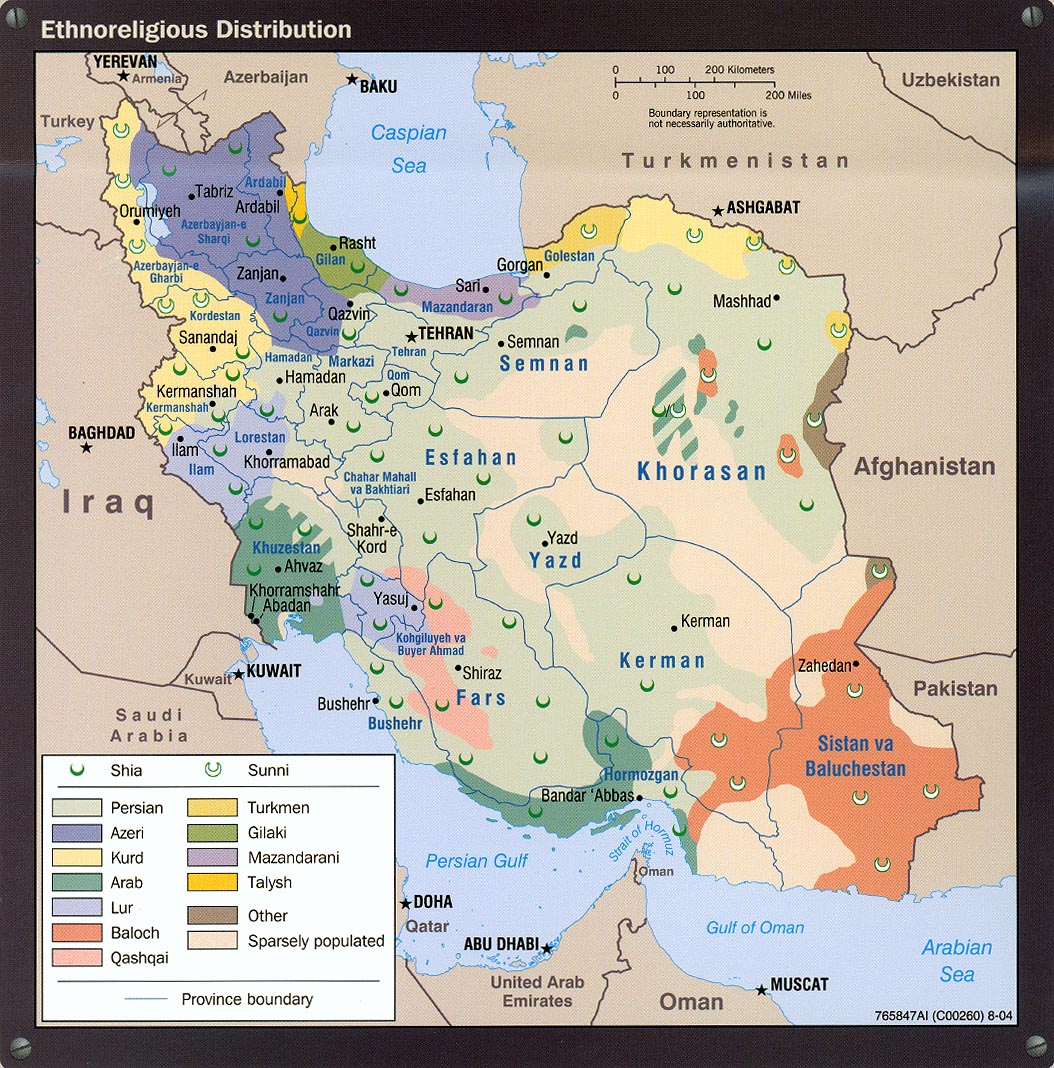
There's been a recent surge (no pun intended) of chatter in the mainstream media concerning a possible invasion/air-strike/surgical bombing of the Islamic Republic of Iran. The thought has been buzzing around in the background of policy circles in Washington (and Tel Aviv for that matter) for a while, certainly at least since W's State of the Union address on January 29, 2002 where he made his infamous "axis-of-evil" remark.
Of course, nowadays we can joke about that strange, aberrant era, the time of W and neo-cons, of the "war against terror," "orange alerts" and "dirty bombs." And though we still have with us some of the proponents of pre-emptive strikes and jingoism like Coulter, Rush and Mike Evans, other more temperate voices like Gore, Olbermann and Carter have risen to reclaim territory in the public sphere. The far-right is on the retreat.
Need more proof? Go and take a look at the candidates for the 2008 Presidential race. Not one of the at least 5 supposed frontrunners on the GOP side has broken through as a clear winner yet. All bets are off. Average Republicans are splintered in their choice to back a candidate and a considerable percentage have yet to declare their allegiance to anyone.
Left-wing or right, looking at the GOP and Democratic debates, it's two totally different worldviews. One side seems stuck on the September 12, 2001 mentality of "gotta find those terrrorists, smoke 'em out, get those varmints on the run, gotta defend America." The other is making once-taboo topics like universal health care, diplomacy and multilateralism, ending the occupation of Iraq and seriously fighting global warming the centre of political discussion. On the ground, in the small towns, in the living rooms of America, the people are not worrying about an invisible invasion of bearded Muslamo-Nazi goons. They care about their kids going to a good school, about being paid fairly for their hard work and about building a decent savings for retirement. Come to think of it, that doesn't sound too different from what most Iranians, Iraqis or anyone else wants.
So why so much Iran-this, Iran-that talk? Honestly, it's pretty simple. War talk hijacks the debate. It is a red herring, as they say in fiction. A random, false lead that interrupts the story and sends the pursuer of truth down the wrong path. It halts the relentless tide of progress and all of a sudden, we find ourselves back in 2002 talking about WMDs and the imminent threat of Iraq and Saddam.
It irks me greatly that so many of America's supposedly finest journalists and politicians continue to confuse the two distinct nations of Iraq and Iran. I shudder to think if we start mixing up the two Koreas, or Australia and Austria, or Israel and Palestine.
The W age is fast coming to a close. Some lefties say it's already done, that anything W says is irrelevant and a joke and that no-one trusts him anymore anyway. His approval ratings have been slumming around in the record-lows for more than a year. A popularly-supported military offensive by the U.S. or its surrogate instrument Israel is unthinkable now. The move has no support amongst regular people, moderate politicians nor, most importantly, with rank-and-file military commanders.
The worst part about this whole sideshow is that while we waste newspaper and website space on empty Iran talk, the blood of the children of Iraq still spills every day.
Iraq (with a *q*) is the real issue, and has been, for four, going on five, long years. May God have mercy on those suffering people.
=//Turnquest
Of course, nowadays we can joke about that strange, aberrant era, the time of W and neo-cons, of the "war against terror," "orange alerts" and "dirty bombs." And though we still have with us some of the proponents of pre-emptive strikes and jingoism like Coulter, Rush and Mike Evans, other more temperate voices like Gore, Olbermann and Carter have risen to reclaim territory in the public sphere. The far-right is on the retreat.
Need more proof? Go and take a look at the candidates for the 2008 Presidential race. Not one of the at least 5 supposed frontrunners on the GOP side has broken through as a clear winner yet. All bets are off. Average Republicans are splintered in their choice to back a candidate and a considerable percentage have yet to declare their allegiance to anyone.
Left-wing or right, looking at the GOP and Democratic debates, it's two totally different worldviews. One side seems stuck on the September 12, 2001 mentality of "gotta find those terrrorists, smoke 'em out, get those varmints on the run, gotta defend America." The other is making once-taboo topics like universal health care, diplomacy and multilateralism, ending the occupation of Iraq and seriously fighting global warming the centre of political discussion. On the ground, in the small towns, in the living rooms of America, the people are not worrying about an invisible invasion of bearded Muslamo-Nazi goons. They care about their kids going to a good school, about being paid fairly for their hard work and about building a decent savings for retirement. Come to think of it, that doesn't sound too different from what most Iranians, Iraqis or anyone else wants.
So why so much Iran-this, Iran-that talk? Honestly, it's pretty simple. War talk hijacks the debate. It is a red herring, as they say in fiction. A random, false lead that interrupts the story and sends the pursuer of truth down the wrong path. It halts the relentless tide of progress and all of a sudden, we find ourselves back in 2002 talking about WMDs and the imminent threat of Iraq and Saddam.
It irks me greatly that so many of America's supposedly finest journalists and politicians continue to confuse the two distinct nations of Iraq and Iran. I shudder to think if we start mixing up the two Koreas, or Australia and Austria, or Israel and Palestine.
The W age is fast coming to a close. Some lefties say it's already done, that anything W says is irrelevant and a joke and that no-one trusts him anymore anyway. His approval ratings have been slumming around in the record-lows for more than a year. A popularly-supported military offensive by the U.S. or its surrogate instrument Israel is unthinkable now. The move has no support amongst regular people, moderate politicians nor, most importantly, with rank-and-file military commanders.
The worst part about this whole sideshow is that while we waste newspaper and website space on empty Iran talk, the blood of the children of Iraq still spills every day.
Iraq (with a *q*) is the real issue, and has been, for four, going on five, long years. May God have mercy on those suffering people.
=//Turnquest
2007/03/11
Happy B-Day, Mr. Bin Laden

Last Saturday, March 10, the world’s most famous fugitive and face of international terrorism, Osama Bin Muhammed bin Awad bin Laden, celebrated his 50th birthday. Assuming of course, he is still alive.
For the purposes of this column, we shall assume he is. The logic behind this presumption is that until the “breaking news” photos of his corpse are splashed across television screens and newspapers as proof of his ultimate demise, he is as good as alive, and able to elicit the same amount of fear regardless. The United States military, in order mostly to pre-empt conspiracy theorists, made no effort to hide the grisly pictures of Abu Musab Al-Zarqawi or Uday and Qusay Hussein, sons of the late Saddam Hussein who himself received a televised video death.
But I digress. Bin Laden remains the symbolic figurehead for the shadowy Al-Qaeda group, even though those in the know will tell you that he has almost no authority anymore, considering his unknown location. It has been more than five years since he’s gone on the run, most likely changing hiding spots in the mountainous border region between Afghanistan and Pakistan. It was one of these hiding spots, the infamous Tora Bora mountains, where U.S. troops came closest to capturing him back in 2001. Alas, he escaped and the rest of the story has been left to hazy speculation on the part of bored political junkies.
As many have pointed out, he has also been unusually quiet recently. There haven’t been any of the once-frequent audiotapes since early last year. The last known video was even farther back, in October of 2004. One of the last times he spoke though, he offered an uncharacteristic truce to the Americans, which of course was swiftly refused. Yet his silence hasn’t kept some in the Bush administration from relentlessly reminding people that he is still out there, maybe just around the street corner, lurking in a dark place, ready to pounce out like a masked 90s horror villain. Other more cynical attitudes say he’s just being kept in a box in the President’s closet, ready to be brought out to invigorate a failing legacy.
This columnist would go as far as to state the number one driving political force in all of American politics for the last few years has been the fear of Bin Laden. More so than right-left friction, more than the Iraq War fallout, more than even the general dislike for President Bush. It is that chronic fear of another attack, another day waking up to breaking news on CNN and panicked phone calls from relatives that has shaped the voting patterns of the electorate and politicians alike. Bush may have his finger on the nuclear button, but Bin Laden has his on the nerves of every American old enough to watch the news.
There is, one would imagine, a different kind of fear on the part of U.S. military forces. What if Bin Laden has already died of natural causes? Certainly that would be anti-climactic, denying them the glory of a final gunbattle with him and his bodyguards and the satisfaction of finally catching their man. As well, it would once and for all end this fear of the ever-potent bogeyman in the public. Such a consequence would only make way for politicians to declare the War on Terror at an end and dilute any arguments for further military action in Middle East countries. Sure, they could dig up some other creepy bearded man and say that he’s the real bad guy (and they will), but it would still mark the end of an era.
What kind of man could elude the pursuit of the most powerful nation on Earth for five years with a $25 million bounty on his head, “dead or alive”? A man who competes only with the President of the United States for being the most famous living human being? He’s described as soft-spoken and even charming in person. A multi-millionaire through inheritance and the 17th of maybe as many as 55 children, few could have imagined this soccer-playing Saudi could have gained the notoriety that he did. Regardless of how the rest of his life plays out, Bin Laden has scorched a place in the history books if for no other reason than being the first Emmanuel Goldstein of the 21st century.
=//Turnquest
2007/03/09
His Majesty King Abdullah II of Jordan Speaks Before Congress

The man's a coward, a criminal and a tyrant by nature, but his wife's hot and this speech is not bad either. It's about Palestine.
* * *
In the Name of God, the Compassionate, the Merciful.
Madam Speaker,
Mr. Vice President,
Honorable Senators and Members of Congress,
My friends,
Thank you for such a warm welcome. It is an honor to stand, as my father did, before this historic institution. Allow me to thank you, on behalf of all Jordanians.
Jordan and the United States have had a long friendship. It is a special privilege to be here in the year that the American Congress welcomes its first woman Speaker, and its first Muslim-American member of Congress. These milestones send a message around the world about the America I know so well, a place where individuality is nurtured, a place where hard work is rewarded, a place where achievement is celebrated. The America I know so well believes that opportunity and justice belong to all.
In my days in Massachusetts, I also learned something of New England virtues. There wasn't actually a law against talking too much, but there was definitely an attitude that you didn't speak unless you could improve on silence.
Today, I must speak; I cannot be silent.
I must speak about a cause that is urgent for your people and for mine. I must speak about peace in the Middle East. I must speak about peace replacing the division, war, and conflict that have brought such disaster for the region and for the world.
This was the cause that brought my father King Hussein here in 1994. With Israeli Prime Minister Yitzhak Rabin beside him, he spoke of a new vision for the Middle East. Their courageous work for peace received bipartisan support from your leaders. And there was tremendous hope for a new era. There was tremendous hope that people would be brought together. There was tremendous hope that a final and comprehensive settlement of all the issues would be achieved.
Thirteen years later, that work is still not completed. And until it is, we are all at risk. We are all at risk of being victims of further violence resulting from ideologies of terror and hatred. It is our greatest and most urgent duty to prevent such dangers to our region, to your country and to the world. The choice is ours: an open world full of promise, progress and justice for all; or a closed world of divided peoples, fear, and unfulfilled dreams. Nothing impacts this choice more than the future of peace in the Middle East.
I come to you today at a rare, and indeed historic, moment of opportunity, when there is a new international will to end the catastrophe. And I believe that America, with its enduring values, its moral responsibility, and yes, its unprecedented power, must play the central role.
Some may say, 'Peace is difficult, we can live with the status quo.' But, my friends, violent killings are taking place as part of this status quo. Palestinians and Israelis are not the only victims. We saw the violence ricochet into destruction in Lebanon last summer. And people around the world have been the victims of terrorists and extremists, who use the grievances of this conflict to legitimize and encourage acts of violence. Americans and Jordanians and others have suffered and survived terrorist attacks. In this room, there are representatives of American families and Jordanian families who have lost loved ones. Thousands of people have paid the highest price, the loss of their life. Thousands more continue to pay this terrible price, for their loved ones will never return. Are we going to let these thousands of lives be taken in vain? Has it become acceptable to lose that most basic of human rights? The right to live?
The status quo is also pulling the region and the world towards greater danger. As public confidence in the peace process has dropped, the cycle of crises is spinning faster, and with greater potential for destruction. Changing military doctrine and weaponry pose new dangers. Increasing numbers of external actors are intervening with their own strategic agendas, raising new dangers of proliferation and crisis. These are groups that seek even more division: faith against faith, nation against nation, community against community. Any further erosion in the situation would be serious for the future of moderation and coexistence, in the region and beyond. Have we all lost the will to live together in peace celebrating one another's strengths and differences?
Some may say, 'But there are other, urgent challenges.' How can there be anything more urgent than the restoration of a world where all people, not only some people, all people have the opportunity to live peacefully? This is not only a moral imperative, it is essential to the future of our world, because long-term, violent crisis is the enemy of all global prosperity and progress.
Certainly, our era faces critical issues. There is great public concern here, just as in our region, about the conflict in Iraq. The entire international community has vital decisions to make about the path forward, and how to ensure Iraq's security, unity, and future. But we cannot lose sight of a profound reality. The wellspring of regional division, the source of resentment and frustration far beyond, is the denial of justice and peace in Palestine.
There are those who say, 'It's not our business.' But this Congress knows: there are no bystanders in the 21st Century, there are no curious onlookers, there is no one who is not affected by the division and hatred that is present in our world.
Some will say: 'This is not the core issue in the Middle East.' I come here today as your friend to tell you that this is the core issue. And this core issue is not only producing severe consequences for our region, it is producing severe consequences for our world.
The security of all nations and the stability of our global economy are directly affected by the Middle East conflict. Across oceans, the conflict has estranged societies that should be friends. I meet Muslims thousands of miles away who have a deep, personal response to the suffering of the Palestinian people. They want to know how it is, that ordinary Palestinians are still without rights and without a country. They ask whether the West really means what it says about equality and respect and universal justice.
Yes, my friends, today I must speak. I cannot be silent.
Sixty years of Palestinian dispossession, forty years under occupation, a stop-and-go peace process, all this has left a bitter legacy of disappointment and despair, on all sides. It is time to create a new and different legacy, one that begins right now; one that can set a positive tone for the American and Middle East relationship; one that can restore hope to our region's people, to your people, and to the people of this precious world. Nothing can achieve that more effectively, nothing can assert America's moral vision more clearly, nothing can reach and teach the world's youth more directly, than your leadership in a peace process that delivers results not next year, not in five years, but this year.
How do we get there? Not by a solution imposed by one side. A lasting peace can only be built on understanding, agreement and compromise.
It begins with courage and vision. We, all of us, must take risks for peace. The Arab states recognized that reality in 2002, when we unanimously approved the Arab Peace Initiative. It puts forward a path for both sides, to achieve what people want and need: a collective peace treaty with Israel and normal relations with every Arab state, collective security guarantees for all the countries of the region, including Israel, an end to the conflict, a dream every Israeli citizen has longed for since the creation of Israel, and an agreed solution to the refugee problem, a withdrawal from Arab territories occupied since 1967, and a sovereign, viable, and independent Palestine.
The commitment we made in the Arab Peace Initiative is real. And our states are involved in ongoing efforts to advance a fair, just, and comprehensive peace. His Majesty King Abdullah Bin Abdul Aziz of Saudi Arabia initiated the 2002 proposal; today, he continues to rally international support. Momentum is also building among Muslim countries outside the Arab world. Ten days ago, in Islamabad, the foreign ministers of key Muslim states met. They came together to assure Palestinians and Israelis that they are not alone, that we back their effort to make and build peace.
The goal must be a peace in which all sides gain. It must be anchored in security and opportunity for all.
It must be a peace that will free young Palestinians to focus on a future of progress and prosperity.
It must be a peace that makes Israel a part of the neighborhood, a neighborhood that extends from the shores of the Atlantic Ocean, across the breadth of the southern Mediterranean, to the coast of the Indian Ocean.
It must be a peace that enables the entire region to look forward with excitement and hope, putting its resources into productive growth, partnering across borders to advance development, finding opportunities, and solving common challenges.
This goal is visionary, but my friends, it is attainable. History shows that longtime adversaries can define new relationships of peace and cooperation. The groundwork for a comprehensive, final settlement is already in place. At Taba, as in the Geneva Accords, the parties have outlined the parameters of the solution.
But we need all hands on deck. The international community, especially the United States, must be engaged in moving the process forward to achieve real results. Above all, we must make our process serve our purpose. We must achieve an agreed solution to the conflict.
Madam Speaker,
Mr. Vice President,
Honorable Members,
Your responsibility today is paramount. Your potential to help Palestinians and Israelis find peace is unrivalled. This is because the people of the region still regard the United States as the key to peace, the one country most capable of bringing the two sides closer together, holding them accountable, and making a just settlement reality.
Time after time, there has been progress towards peace when Americans have actively engaged. Camp David, Madrid, Wye River: nearly every breakthrough was accomplished when America was determined to help the parties succeed.
On behalf of all those who seek and strive for peace in my part of the world, I ask you now to exert that leadership once again. We ask you to join with us in an historic effort of courage and vision. We ask you to hear our call, to honor the spirit of King Hussein and Yitzhak Rabin, and help fulfill the aspirations of Palestinians and Israelis to live in peace today.
Let me reaffirm that Jordan is committed to playing a positive role in the peace process. It is part of our larger commitment to global co-existence and progress. Ours is an Islamic country with a proud record of diversity, moderation, and shared respect.
Allow me to say, we thank the Congress and the Administration for supporting Jordan's progress and development. I deeply value the partnership between our peoples, and the contributions of so many Americans to the future of our country.
My friends,
"A decent respect for the rights and dignity of all nations, large and small." That's how President Roosevelt – the great F.D.R. – described the basis of American foreign policy. He pledged American support for the four freedoms, freedom from fear, freedom from want, freedom of speech, and freedom of religion, everywhere in the world.
The Four Freedoms speech was given right here, before Congress. And that's entirely fitting. Because it is here in the People's House, that the voices and values of America have made hope real for so many people.
Today, the people of the Middle East are searching for these four freedoms. Today, the people of the Middle East are searching for new hope, hope for a future of prosperity and peace. We have seen the danger and destruction of violence, hatred, and injustice. But we have also seen what people can achieve when they are empowered, when they break down walls, when they commit to the future. And we know that Middle East peace can be a global beginning, creating new possibilities for our region and the entire world.
We look to you to play an historic role. Eleven American presidents and thirty American congresses have already faced this ongoing crisis. For not the future generation, but the generation alive today, let us say together: No more! Let us say together: Let's solve this! Let us say together: Yes, we will achieve this!
No Palestinian father should be helpless to feed his family and build a future for his sons and daughters. No Israeli mother should fear when her child boards a bus. Not one more generation should grow up thinking that violence and conflict are the norm.
As Roosevelt also said, "the justice of morality must and will win in the end." But he knew that it was up to responsible nations to stand up for justice when injustice threatens.
This is our challenge as well. And we must not leave it to another generation to meet this challenge.
Thirteen years ago, my father was here to talk about his hopes for peace. Today, we are talking about a promise that is within our reach.
We can wait no longer and that is why I am here before you. We must work together to restore Palestine, a nation in despair and without hope. We must work together to restore peace, hope and opportunity to the Palestinian people. And in so doing, we will begin a process of building peace, not only throughout the region, but throughout the world. How much more bloodshed and how many more lives will it cost for this grave situation to be resolved?
I say: No more bloodshed and no more lives pointlessly taken!
The young boy, traveling to school with his brother in Palestine, let him have a life of peace.
The mother, watching with fear as her children board a bus in Israel, let her have a life of peace.
The father in Lebanon, working hard to provide an education for his children, let him have a life of peace.
The little girl, born in Iraq, with her wide eyes full of wonder, let her have a life of peace.
The family, together eating their evening meal, in Asia, Africa, North America, South America, Europe, Australia, and the Middle East, let them all have a life of peace.
Today my friends, we must speak; we cannot be silent.
The next time a Jordanian, a Palestinian, or an Israeli comes before you, let it be to say: Thank you for helping peace become a reality.
Thank you very much.
Subscribe to:
Posts (Atom)

